April 2025

MONEY TALK | How to Use Money to Build Your Dream Life

A lot of people have a complicated relationship with money. Whether it’s stress, fear, or simply a lack of knowledge, finances can feel overwhelming. There are so many misconceptions about what it means to be financially successful, and often, we feel like we need to have it all figured out right away. But when you’re going after big dreams—whether it’s writing, starting a business, or pursuing something else—you need to get clear on your relationship with money and how it can work in your favor.

My husband and I have built a six-figure income, which might sound like we can just buy whatever we want. But that’s not the case. We know that in order to live off of our income without overspending, we have to be intentional about every purchase we make. It’s not about how much we make—it’s about how we manage it.

The Spending Flow: Is It Worth It?

When I see something I absolutely love and think I need to have, I go through a simple but powerful spending flow to help me decide whether it’s truly worth the purchase. I ask myself a series of questions to evaluate the necessity and value of that item:

  • Should I buy it?
  • Do I love it?
  • Did I need it like yesterday?
  • Do I really want it?
  • Can I borrow it?
  • Is it really a necessity?
  • Would it improve my life?
  • Do I truly need it?

These questions help me make a decision that aligns with my values and goals, and they keep me from buying things I might regret later. By answering them honestly, I can save money and stay focused on what matters most.

With social media, it’s easy to get caught up in the pressure to keep up with the Joneses—the idea that we need to match the lifestyles, possessions, and achievements of those around us. But constantly comparing ourselves to others can be draining and counterproductive. True financial success isn’t about having the same things as everyone else or living up to someone else’s standards. It’s about aligning your spending and goals with your own values and priorities. By focusing on what you truly want in life—not what others think you should have—you can create a financial plan that works for you and brings fulfillment without the stress of trying to match someone else’s pace.

Focus on the Goals, Not the Numbers

Here’s the thing: we don’t focus on the actual numbers we’re bringing in as much as we focus on what we can afford. I know that sounds crazy, but hear me out. Our goal isn’t to make more money just for the sake of it. Our focus is on the goals we’re trying to achieve with what we’re already earning.

Take, for example, one of our goals: buying a lake house. Can I afford that right now? No, not yet. But one of our current achievable goals is to have annual Carowinds season passes so I can take my son there every day during the summer. That’s something we can absolutely afford right now, and it brings us so much joy. We prioritize goals like that because they’re aligned with our lifestyle.

Prioritize What Truly Matters

When we focus on our big goals, it becomes easier to let go of the small, superficial purchases. Why would I order Uber Eats when I’m saving for a closet upgrade? Why would I splurge on designer clothes when my focus is on upgrading my laptop and vlogging tools to create even better content for my YouTube channel?

By making intentional decisions, we’ve learned that our money is best spent on things that truly align with our long-term dreams and current priorities. It’s about investing in the things that move us forward, not just the things that feel good in the moment.

Define Your Priorities First

I think the key to managing money is simple: start with your priorities. What do you want your day-to-day life to look like? Once you figure that out, you can start designing your finances to support that vision. Whether that’s saving for travel, upgrading your home, or building a creative business, knowing your priorities will make your financial choices so much easier.

Money is a tool to help you build the life you want, and when you focus on your priorities, you can make sure every dollar is working toward your dreams, not just your next impulse buy.

Saving and Investing for Long-Term Financial Freedom

While it’s essential to stay intentional with your spending, it’s also critical to think about saving and investing for the future. Saving a percentage of your income each month can give you the security you need for emergencies and future plans. I recommend saving at least six months’ of living expenses in case of emergency. And don’t just keep that in your normal bank account. Find a high-interest savings account that you can dump that money into. I think the one that we use gives us like 5% on what we’re throwing in there.

On top of that, investing in the right avenues and diversifying your accounts can help your money grow, setting you up for long-term financial freedom. This isn’t something you need to figure out all at once, but the sooner you start, the better. There are tons of investing apps you can look into.

Plus, if you work in corporate and they have a 401K match, then go ahead and do that. Seriously, it’s free money, and you don’t want to miss out on it.

There’s no one-size-fits-all approach to managing your finances, but if you start with a clear vision of your priorities, manage your spending intentionally, and invest wisely, you can build a stable foundation for your future. Ultimately, financial planning isn’t just about having enough money—it’s about using money as a tool to live the life you’ve always dreamed of.

Enjoying Life’s Little Splurges

Even with all of this budgeting and being intentional about my spending, I still allow myself to splurge on things that bring me joy and contribute to my well-being. For me, it’s things like my Daily Grind Planner goodies, which help me stay organized and inspired as I work toward my goals. I also make sure to get my nails done once every two weeks because it’s a small self-care ritual that makes me feel confident and refreshed. Another thing I invest in regularly is quality, supportive shoes that help me stay comfortable, especially during long writing sessions or when I’m on my feet more than usual.

My husband also enjoys splurging on things he loves—like buying video games. It’s his way of unwinding and enjoying his downtime, which is just as important as the work we put into achieving our goals. These are the things that make life enjoyable and balanced. We don’t see them as “wasteful” purchases, but rather as intentional investments in our happiness and well-being.

I recommend sitting down and making a list of all the things that make you happy that cost money. Then, start ranking them. The top three to five items are going to be what you splurge on. The rest can be re-evaluated as you move forward with your new money mindset.

Funding the Life You Want

The key takeaway is that your money should be funding the life you want. It’s not about depriving yourself of the things you enjoy or always saying no to little indulgences. It’s about making sure that the majority of your spending aligns with your bigger goals, and then allowing yourself the freedom to enjoy a few things that truly make you happy.

By thoughtfully budgeting and investing in things that are aligned with our priorities, we’re able to enjoy these little splurges without feeling guilty. In fact, they’re a reminder that financial planning isn’t just about saving and investing for the future—it’s also about creating a lifestyle today that brings fulfillment, joy, and balance. So, indulge a little here and there, but make sure that the way you’re spending your money is always contributing to the life you envision for yourself.

April 2025

Habit Stacking for a Clean and Tidy Home

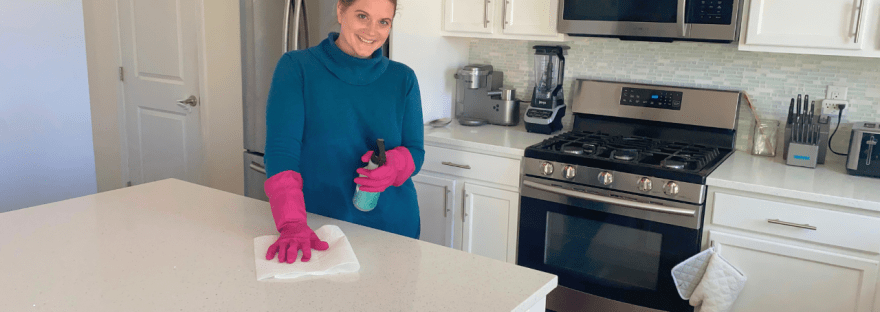
Keeping a clean home while balancing a busy life—especially as a parent—can feel overwhelming. But what if I told you that a simple shift in how you approach cleaning could make it easier and more automatic? Enter habit stacking, a method that pairs a new habit with one you already do regularly. It’s a small but mighty trick that helps you stay on top of chores without feeling like you’re drowning in housework.

I’ve been using habit stacking to keep my home tidy without spending all day cleaning. Here’s how it works and how you can incorporate it into your daily routine!

What is Habit Stacking?

Habit stacking is a concept popularized by James Clear in Atomic Habits. Instead of trying to build a new habit from scratch, you attach it to an existing habit—something you already do daily. This makes it easier to remember and integrate into your routine.

For example, if you already make coffee every morning, you could add the habit of wiping down the counters while you wait for it to brew. Over time, cleaning the counters will feel as natural as making your coffee.

How I Use Habit Stacking for a Cleaner Home

I use habit stacking to fit cleaning into my daily schedule without it feeling like a burden. Here are a couple of ways I do it:

  • Nighttime Routine: After putting my son down for the night, I immediately scrub out his tub and spend five minutes cleaning his bathroom. Since I’m already in there, it’s easy to add this quick habit to my routine.
  • Nap Time Cleaning: When my son goes down for his nap, I throw a load of laundry in before I start my one-hour cleaning session. This ensures I keep up with laundry without feeling like it’s an extra chore.

These small, intentional habits make a huge difference in keeping my home clean without feeling like I’m constantly tidying up.

Simple Habit Stacking Ideas to Try

Want to make cleaning feel more effortless? Here are a few habit-stacking ideas you can start using today:

  1. After brushing your teeth at night, wipe down the bathroom sink and mirror.
  2. When you start the coffee maker in the morning, unload the dishwasher.
  3. After dinner, set a five-minute timer to declutter the living room.
  4. When your kids finish their baths, do a quick wipe-down of the bathroom sink.
  5. While waiting for food to heat up in the microwave, clean one section of the kitchen counter.

Why Habit Stacking Works

  • It eliminates decision fatigue. You don’t have to think about when to clean—it’s already built into your routine.
  • It keeps cleaning manageable. Instead of marathon cleaning sessions, you tackle small tasks consistently.
  • It builds momentum. The more you do it, the more second nature it becomes.

Final Thoughts

Keeping a home clean doesn’t have to be overwhelming. By habit stacking, you can incorporate small cleaning tasks into your existing routine without adding extra stress. The key is consistency—over time, these little habits add up to a cleaner, tidier home with minimal effort.

Have you tried habit stacking for cleaning? Let me know in the comments what habits you’ve stacked to keep your home tidy!

April 2025

The Power of Habit Stacking for a Successful Glow Up

The journey to a successful glow up isn’t about quick fixes or drastic transformations. Instead, it’s about creating lasting, sustainable habits that become part of your daily routine. That’s where the concept of habit stacking comes in—a simple yet powerful technique that played a huge role in my own glow up journey.

When I started the 121 Glow Up Challenge by Angie Bellemare and the Daily Grind team, I was immediately introduced to the idea of building habits one step at a time. Initially, it seemed overwhelming. There were 18 different habits to incorporate into my day, covering everything from skincare and hydration to physical fitness and mental health. It was a lot to take on, especially while balancing the demands of being a new mom.

But here’s the secret: Habit stacking helped me succeed.

What is Habit Stacking?

Habit stacking is the process of pairing a new habit with an already existing one. The idea is that you use a habit you already do automatically (like brushing your teeth or drinking coffee) as a trigger to perform a new, desired behavior. By linking new habits to previously established ones, you create a system that requires less willpower, which makes it easier to stay consistent.

For example, instead of trying to remember to drink 80 ounces of water throughout the day, I would stack that habit on top of a routine I already had, like my morning coffee. Every time I finished my coffee, I would make it a point to drink a large glass of water. Over time, it became automatic, and I didn’t need to remind myself to do it anymore.

How Habit Stacking Transformed My Glow Up Journey

As a new mom, my life was busy and chaotic. Between recovering from a C-section, caring for my baby, and adjusting to my new responsibilities, it felt like I didn’t have time to focus on myself. But I knew something needed to change if I wanted to feel better—physically, mentally, and emotionally. That’s where habit stacking made a huge difference.

I didn’t have time to dedicate long hours to working out or meal prepping, so I used habit stacking to maximize every moment. Here are a few examples of how I incorporated it into my routine:

1. Morning Routine: Pre-Workout and Supplements

In the mornings, while my son was eating breakfast, I would quickly prepare my pre-workout drink, collagen supplement, and probiotic. I combined all three into one glass of water, which saved me time and ensured I didn’t forget any of them. I paired this with another habit I already had—getting my son settled for breakfast. This moment in my morning routine became my cue to get my health habits started, and before I knew it, I was consistently getting my supplements in.

2. Self-Care While Baby Eats: Ice Rolling and Skincare

While my son was eating, I also used the time to complete my skincare routine. Instead of seeing it as an extra chore, I saw it as a chance to focus on myself. While he was munching away, I would take the opportunity to ice-roll my face for 10-15 minutes. This wasn’t just a way to improve my skin. It was a form of self-care that helped me feel rejuvenated and grounded. Combining this with a task I was already doing (feeding him) made it an easy, no-brainer habit.

3. Walks with Baby and Dog: Getting My Steps In

Getting enough steps in each day was essential to my glow up, but it wasn’t always easy to find time for a dedicated walk. Instead of forcing myself to set aside an hour, I started pairing walking with other activities I already did, like taking my dog outside or getting my baby out for fresh air. Whether it was a short walk around the block or a longer stroll, it became a natural part of my routine. I was able to kill two birds with one stone—getting exercise and bonding with my baby.

4. Housework and Mental Clarity: Tidy While You Think

Another important habit I added to my day was keeping my spaces tidy. For me, a clean space means a clear mind. I’d pair tidying up with other tasks, like putting on a podcast or listening to an audiobook. As I folded laundry, wiped down surfaces, or swept the floors, I used the time to listen to something inspiring or educational. Not only did I feel productive, but I also felt mentally refreshed after clearing the clutter.

5. Stretching and Yoga: At-Home Self-Care

Even on days when I didn’t make it to the gym, I found ways to incorporate movement into my day. Stretching and yoga were two habits I stacked into my post-shower routine. After I got dressed, I would take 5-10 minutes to do some light stretching or yoga poses. It wasn’t a full workout, but it helped release tension in my body and set a calming tone for the day. Pairing it with something I was already doing (getting ready in the morning) made it so much easier to keep up.

The Key to Success: Consistency and Small Wins

The beauty of habit stacking is that it’s about small wins. Instead of trying to overhaul my entire lifestyle at once, I was able to integrate one tiny habit at a time. Each success—whether it was drinking my water, getting my workout in, or taking a few minutes for skincare—added up over time.

As a new mom, I was exhausted and overwhelmed, and trying to change everything at once would’ve felt impossible. But by stacking habits onto things I was already doing, I didn’t have to make drastic changes. I simply needed to be consistent. And over the course of months, I started noticing real, lasting results.

Why Habit Stacking Works for a Glow Up

  1. Time Efficiency: By pairing habits with existing routines, you maximize your time. You don’t have to carve out extra hours to focus on your glow up—you can incorporate healthy habits into your existing schedule.
  2. Increased Accountability: The more habits you stack, the more likely you are to stay consistent. It builds momentum and creates a cycle of success that motivates you to keep going.
  3. Reduced Overwhelm: Trying to change too much at once can feel daunting. Habit stacking allows you to make small adjustments that lead to big results without the stress.
  4. Built-In Reminders: Habit stacking creates built-in cues. When you pair a new habit with an existing one, you’re more likely to remember to do it because the routine is already familiar.

Final Thoughts

If you’re feeling overwhelmed by the idea of a glow up, habit stacking is the perfect solution. It’s not about doing everything perfectly—it’s about making small, manageable changes that become second nature. Start with one habit, pair it with something you already do, and build from there. Before you know it, you’ll be glowing inside and out.

Remember, the journey to your glow up doesn’t have to be rushed. It’s about consistency, patience, and stacking those habits that will lead to long-term success. Try it for yourself, and let me know how habit stacking works for you!

The Power of Boredom – How Reducing Screen Time Boosted My Creativity
April 2025

The Power of Boredom – How Reducing Screen Time Boosted My Creativity

As a writer, I used to believe that I needed constant inspiration—an endless stream of Pinterest boards, beautifully curated aesthetics, and thought-provoking articles to fuel my creativity. But what I really needed was boredom.

Breaking the Habit of Constant Stimulation

When I quit my corporate job and transitioned to being a full-time writer and stay-at-home mom, I unknowingly developed a bad habit: filling every single spare moment with my phone.

  • Standing in line? Scroll.
  • Waiting for my son to wake up from a nap? Scroll.
  • A moment of quiet? Scroll.

I told myself that I was “researching” or “finding inspiration,” but in reality, I was overstimulating my brain and leaving no room for my own thoughts. The more I consumed, the less creative I felt. Instead of developing fresh ideas, I found myself overwhelmed, uninspired, and stuck in comparison traps.

The Lightbulb Moment: Boredom Fuels Creativity

One day, I left my phone in another room while taking a walk. At first, it felt weird—I kept reaching for it, wanting to check something, listen to something, or scroll through something. But as I walked in silence, something surprising happened.

My mind started to wander.

I found myself thinking about my book ideas, untangling plot problems, and imagining new character interactions. Without the constant noise of social media, my brain had space to breathe.

That’s when I realized that boredom isn’t a bad thing. It’s a creative superpower.

How I Embrace Boredom to Boost Creativity

Instead of filling every moment with external content, I now give myself space to just think. Here’s how I do it:

Letting my mind wander on walks – I walk without headphones, and instead of consuming a podcast or audiobook, I let my thoughts drift. Some of my best plot twists have come from these quiet moments.

Daydreaming about my characters and stories – Instead of reaching for my phone first thing in the morning or while sipping coffee, I let myself daydream. I play out different scenarios for my characters, and sometimes, I surprise myself with new ideas.

Journaling random thoughts – I used to only journal when I had something specific to write about. Now, I scribble down whatever comes to mind—ideas, fragments of dialogue, or even a single word that resonates with me. These random thoughts often spark my next big writing breakthrough.

From Consumer to Creator

Now, instead of consuming other people’s content all day, I create my own. I no longer feel like I need a perfectly curated aesthetic board or endless writing prompts to spark creativity. The best ideas don’t come from scrolling—they come from stillness.

So if you’re feeling creatively stuck, I challenge you: embrace boredom. Step away from your phone, sit in silence, and see where your thoughts take you. You might just unlock your next great idea.

Have you noticed a connection between boredom and creativity? Let’s chat in the comments! ⬇️✨